The church of St. Joseph and St. Lucy
- Home
- |
- Discover Montaione
- |
- The church of St. Joseph and St. Lucy
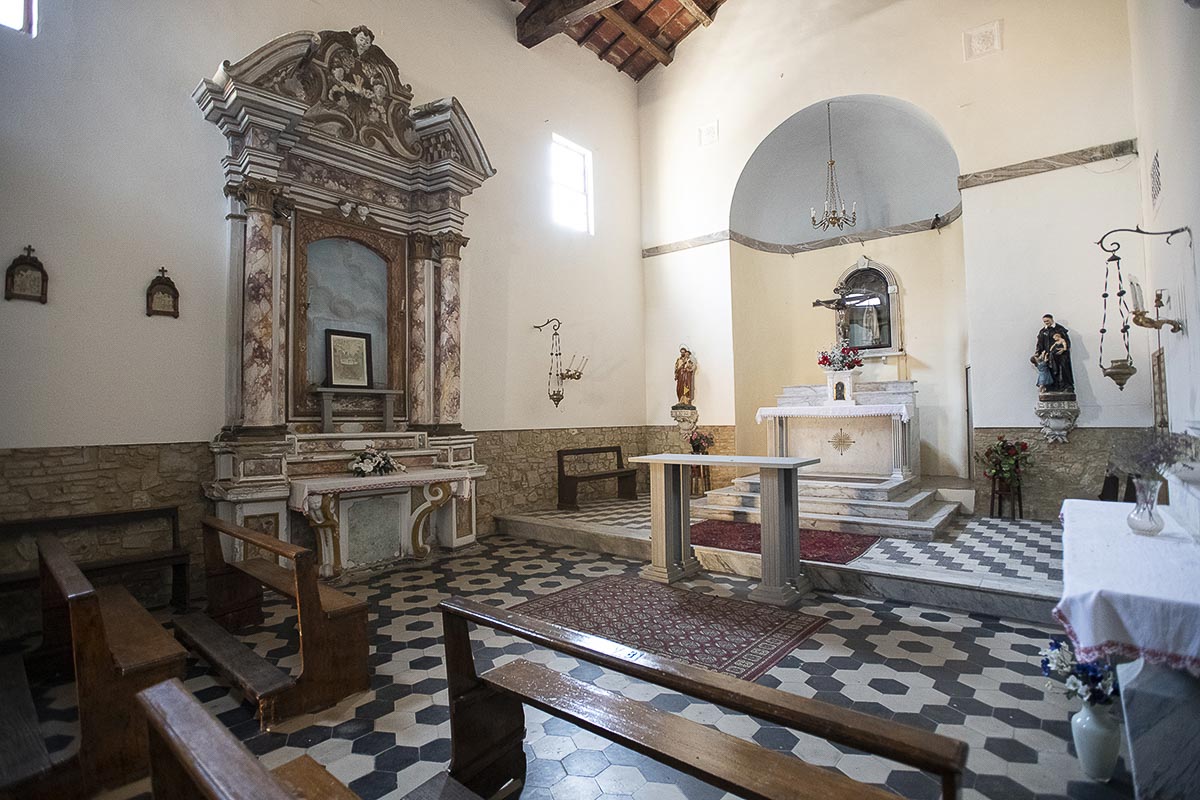
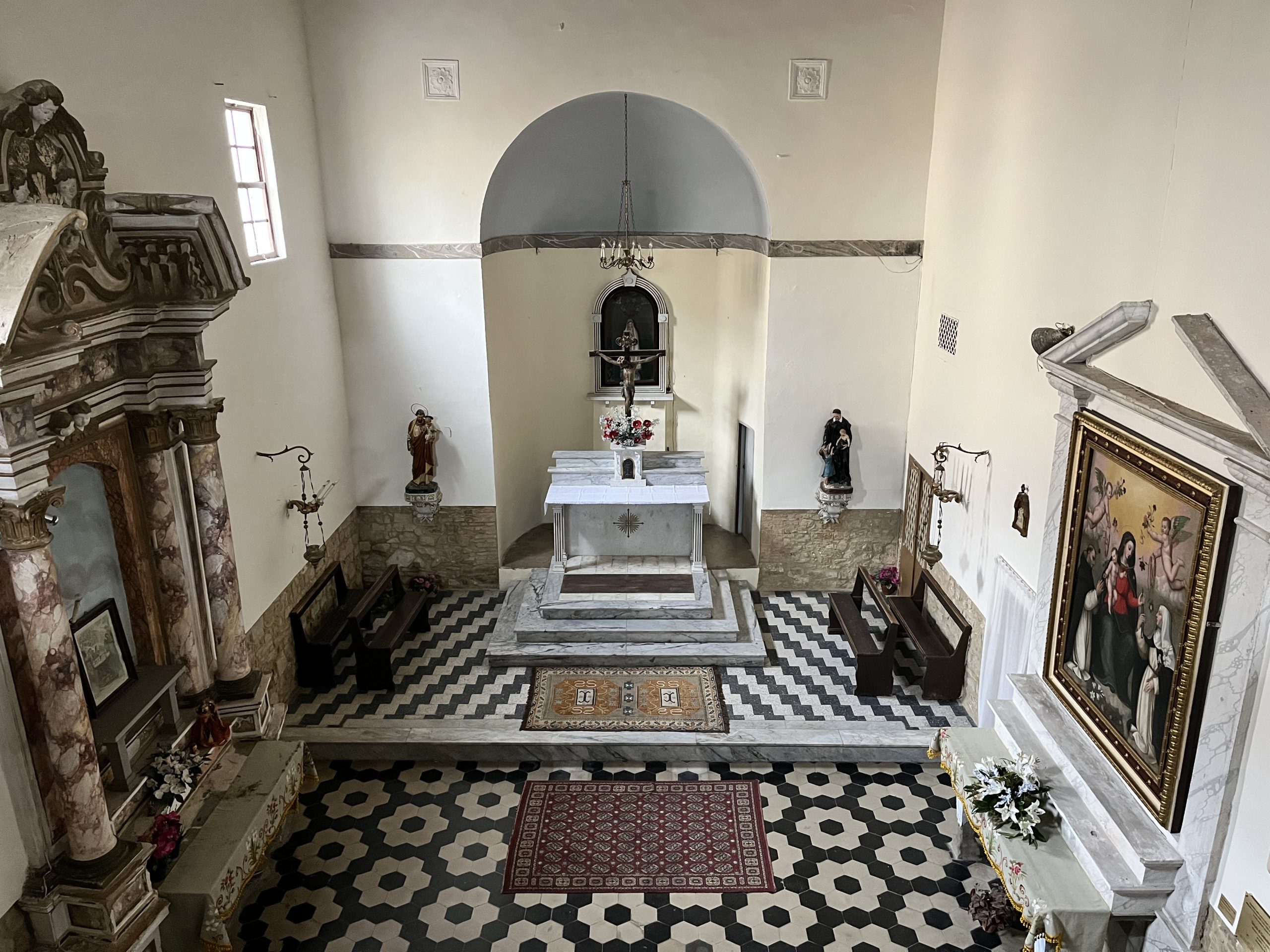
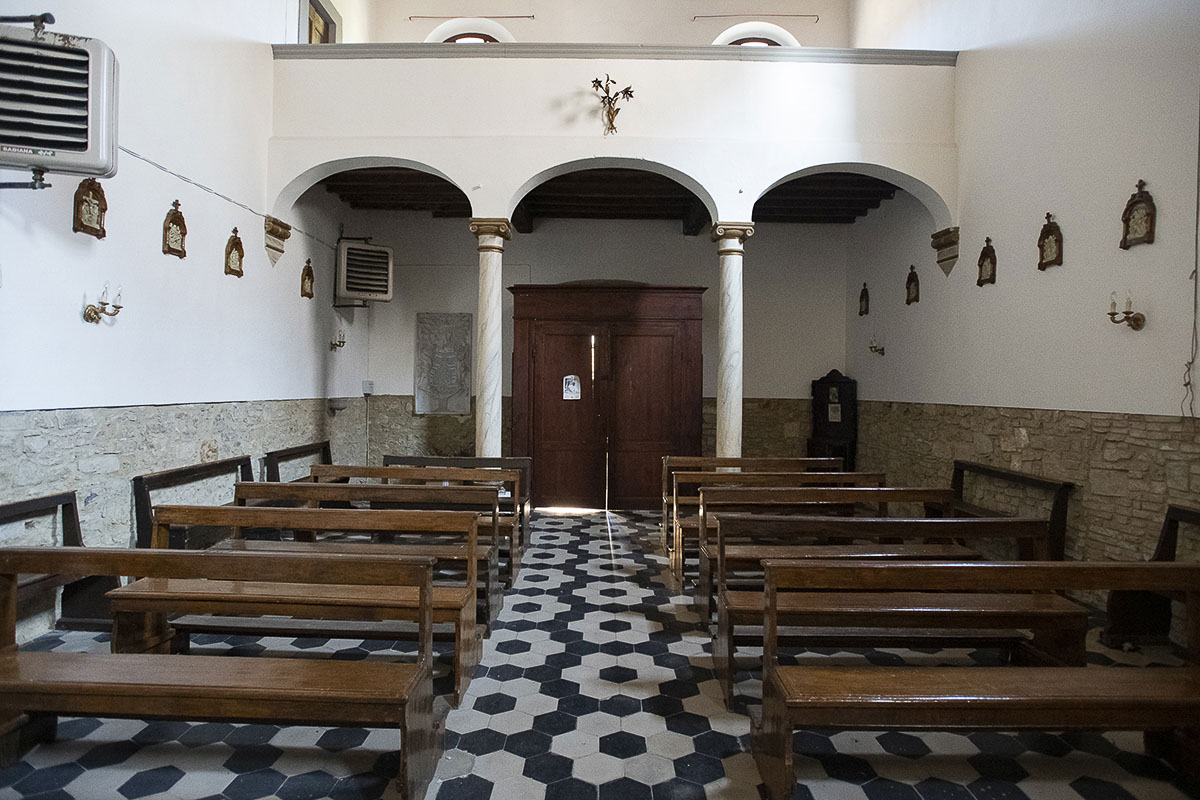
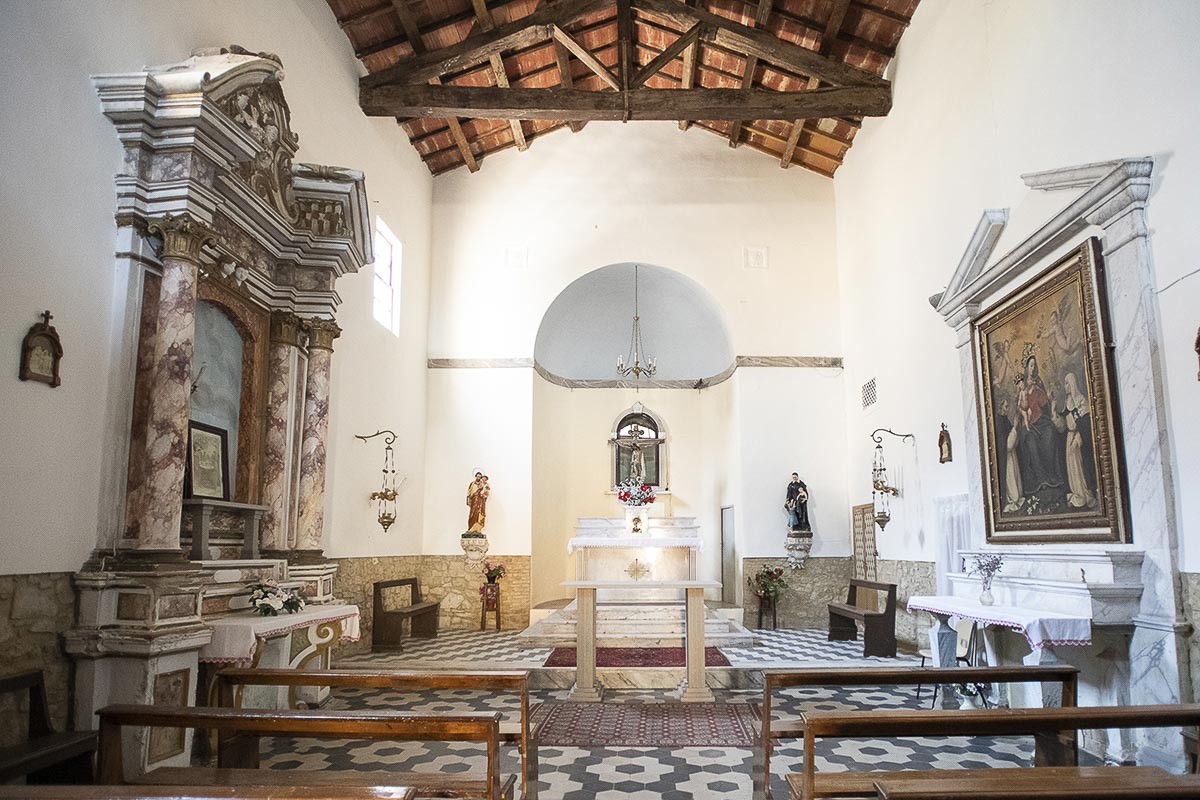
Built in the middle of the sixteenth century, the churchof St. Joseph and St. Lucy is commonly called the “Church of the sisters” by the residents of Montaione because it was annexed to a former convent that once follone the rule of Saint Benedict. Documents indicate the date of 1562 as the decisive year in the slow process of building the monastery and church by six young women strawmakers from the small Valdelsa municipality. Sources tell us that, despite attempts to dissuade them by local notables, the six women, determined to see the sacred building completed, entered the monastery under construction on 18 June 1562 at two o’clock in the afternoon, ‘taking a ladder’. The church was completed in 1567, despite open hostility from Cosimo de’ Medici, but thanks to a grant from Giovanni di Simone da Filicaia, it was consecrated to Saints Joseph and Lucy in 1585, becoming part of the Benedictine Order. The information handed down in the Historical Memoirs of Montaione, according to which ‘the nuns wore turquoise cloth and were under the protection of the Virgin Mary’, confirms the founders’ original lay status and their affiliation to the Confraternity of the Most Holy Rosary.
A women’s conservatory in the eighteenth century, the convent fell prey to the policy the policy of the suppression of monastic rodersi, which begun uder the reign of Grand Duke Leopold II of Lorraine and continued in the Napoleonic era. Today the entire complex is owned by the municipality, which uses the former convent as its main offices and which has carried out a number of restoration works on the church over time.
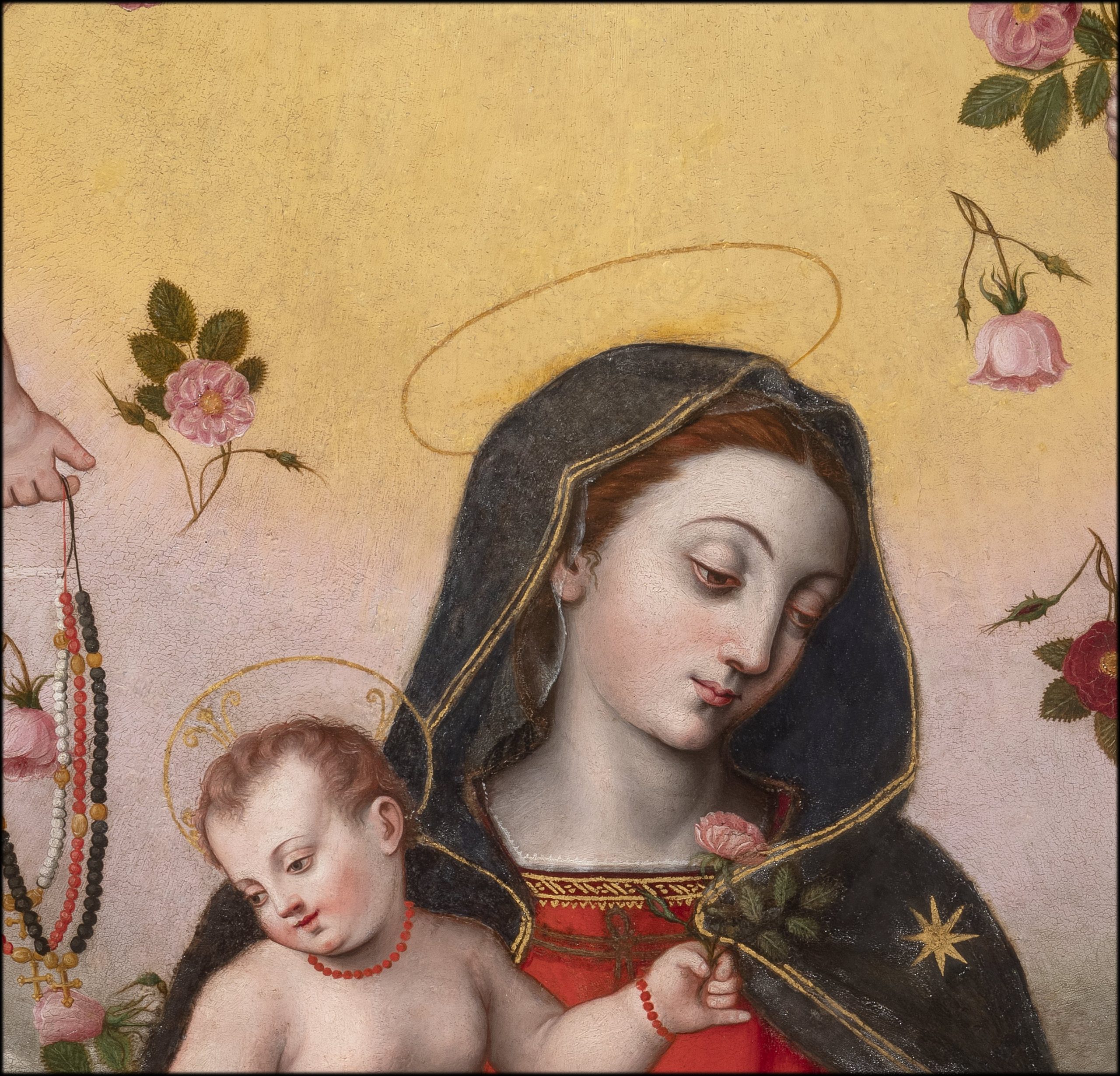
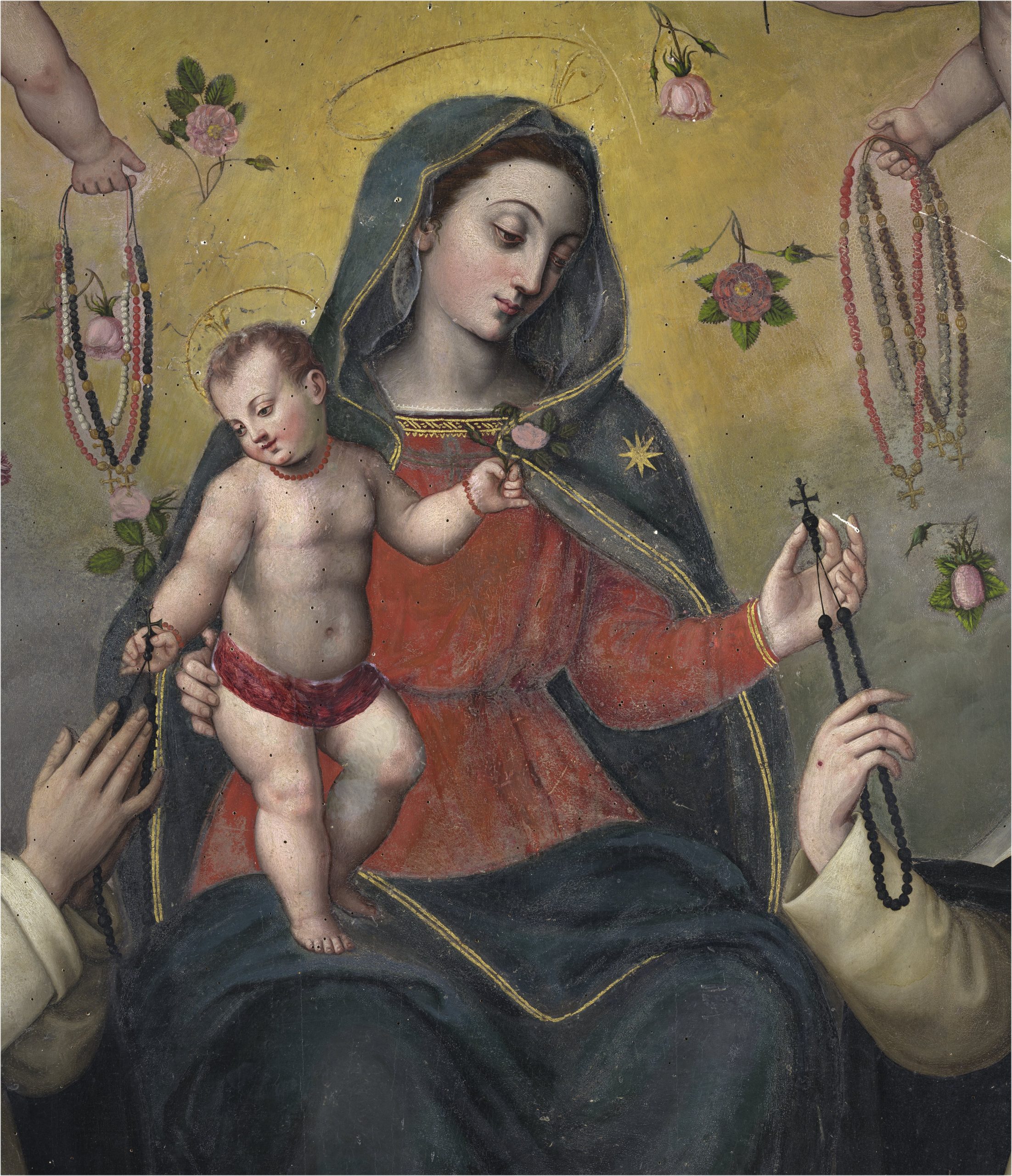
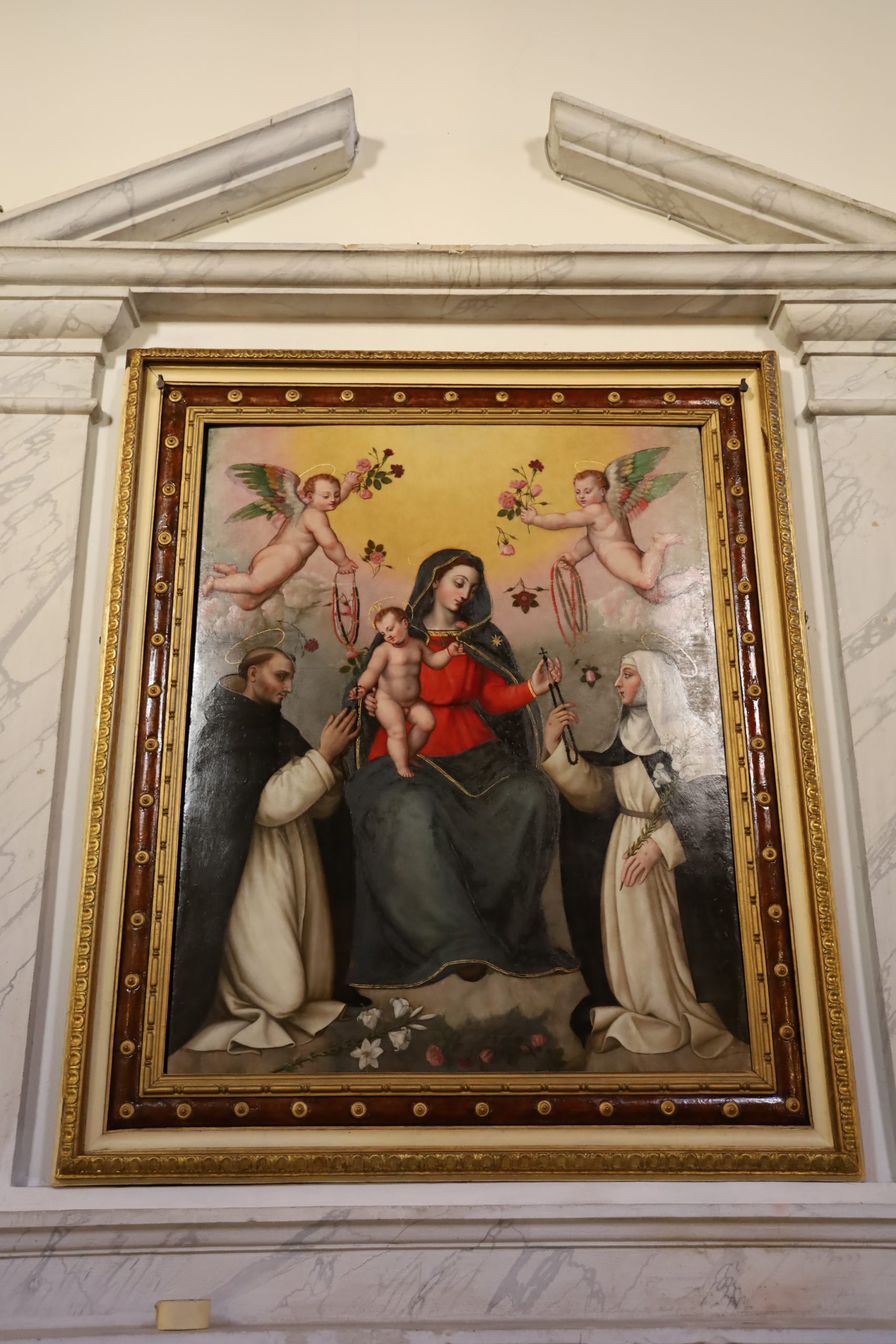
The church itself i salso of interest becaus of a painting, one of the most important in Montaione, The “Our Lady of the Rosary” which was created by the nun and painter Plautilla Nelli, originally named Polissena de’ Nelli (Florence 1524-1588). The Dominican nun Plautilla, a miniaturist and ‘pictora’ [painter], as she was keen to define herself, is the first female Florentine painter whose works are preserved, and one of the very few female artists celebrated by Giorgio Vasari, who praised her widespread fame and the abundance of her production in “The lives of the most excellent Painters, Sculptors and Architects”. Artworks by this self-taught artist, who educated herself in the convent decorated adorned many Florentine noble residences in the sixteenth century, and some of her frescoes and paintings can be admired in churches and convents in Florence such as Santa Maria Novella and San Marco. In 2017, a large exhibition dedicated to her organised by the Uffizi Gallery was the crowning moment a the process of critical rediscovery after a long period spent in obscurity, which restored this artistic nun to her rightful place in the history of Italian art.
In 2024, celebrating 500 years from the artist’s birth, the painting on woods was restored, thanks to the contribution of several private sponsors.
The work was dismantled from the altar and transferred to the Opificio delle Pietre Dure, where the CNR National Institute of Optics carried out preliminary investigations. It was then transferred to Roberto Buda’s laboratory for the restoration of the wooden support, which began with the disinfestation of xylophagous insects by anoxia. The frame was transported to Roberta Lapucci’s laboratory for restoration, while the painting was transported to Rossella Lari’s laboratory.
The painted surface showed atmospheric dusting on an altered, yellowed and darkened varnish. An extensive repainting of the background discoloured the characters and flowers. Even the Madonna’s blue mantle was almost completely repainted. Drips of various kinds streaked the painting and a constellation of candle wax splashes dotted the lower part. A vast lack of colour and preparation was on the right side. The material superimposed on the painting was removed, regaining the original colour, partly worn away by previous interventions, and with colour slippage creating dark cobwebs on the background. After the missing parts were filled in, the pictorial restoration was carried out, and the painting completed the work. The crowns on the head of the Madonna and Child were removed, and are displayed in a reliquary next to the painting.
Plautilla Nelli
Plautilla Nelli, the first Florentine woman to establish herself as a painter in the sixteenth century, was born on 29 January 1524. She became a nun in the Dominican monastery of St. Catherine of Siena in the late 1530s, when she was about 14 years old. She may have been introduced to the art of miniature painting by an older nun, Maria Cleofe dello Scappella. According to Vasari, Plautilla became a miniaturist before taking up easel painting. Her small paintings were much admired and widely collected. She also painted altarpieces on panel and canvas. Contemporary sources report some of these large works, including two paintings for S. Caterina da Siena (Compianto, now in the San Marco museum; Adoration of the Magi, lost in 1800), a Pentecost for S. Domenico in Perugia (still in situ) and a Sacred Conversation for S. Lucia in Pistoia (lost). His largest known painting is The Last Supper created for his refectory. It was made with the help of his pupils (now in the S. Maria Novella Museum). The three lunettes installed above The Last Supper-Saint Dominic receiving the Rosary, the Crucifixion and Saint Catherine of Siena in prayer-were also collaborative projects (now in the S. Marco Museum). The last known painting by Plautilla Nelli is an altarpiece for the dormitory of her monastery. According to sources, this panel painted by ‘Mother Sister Plautilla and her companions’ was finished in 1586, two years before her death. It depicted the Eternal Father with angels, St. Dominic and St. Catherine of Siena (lost). In composing her paintings, Plautilla often drew on the work of masters associated with the School of St. Mark. She also drew on a collection of drawings by Fra Bartolomeo della Porta, donated to the nuns after the death of his heir, Fra Paolino da Pistoia.
Church of St. Joseph and St. Lucy, Piazza Municipio, 1 – Montaione
43.552429, 10.911773